
What Is a Second Brain?
How AI can help organize, search, and summarize personal or organizational knowledge using a Second Brain.
Published
- Artificial Intelligence
Archive article, first published 2026-05-11. The original context and examples are retained for review.
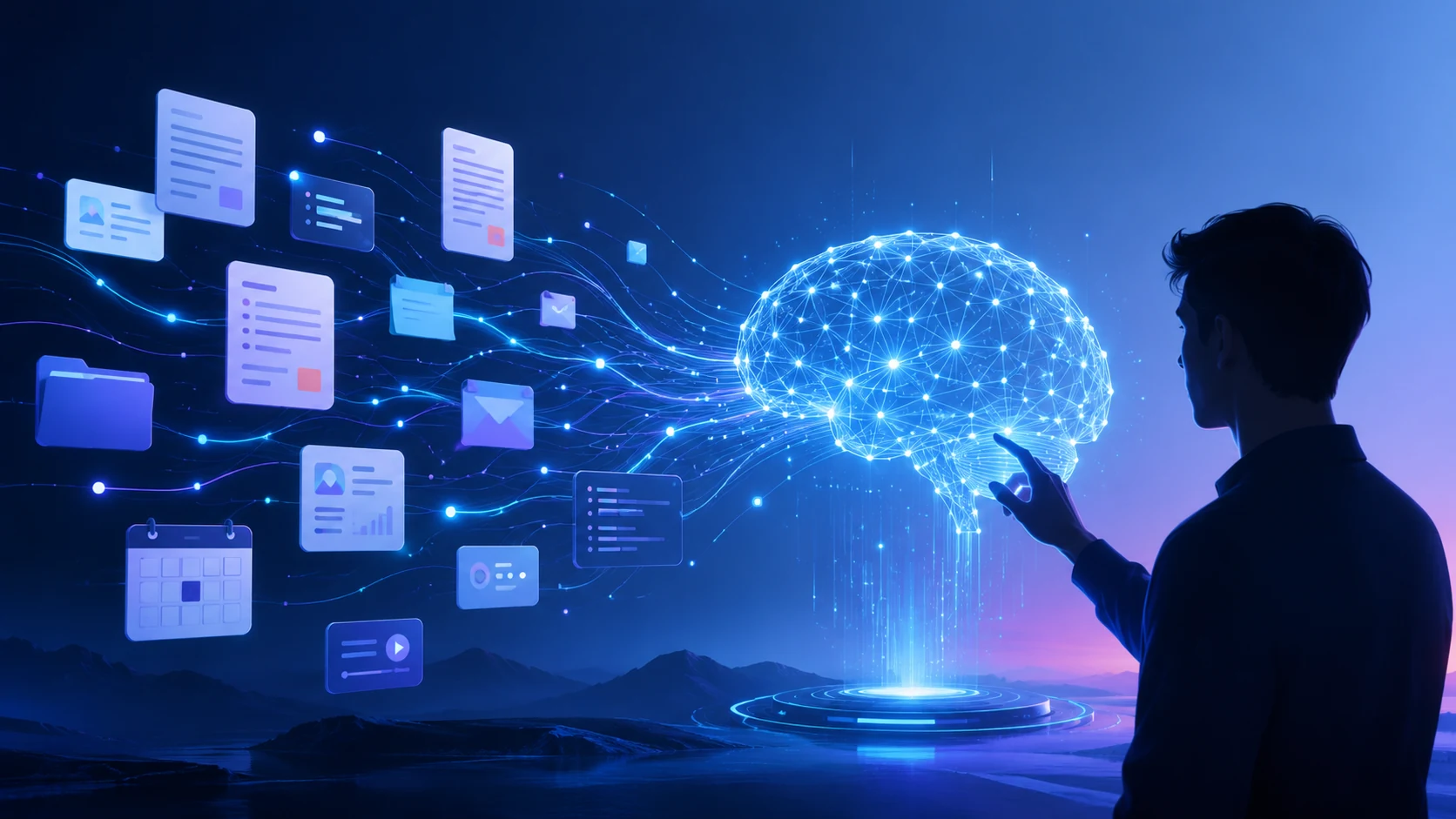
A Second Brain uses AI to help store, find, and summarize information used in everyday life or within an organization. This includes documents, meeting notes, ideas, customer information, operating manuals, and internal company knowledge.
Its main purpose is to make scattered information easier to use. People can ask the AI questions and have the system search for answers in information they already hold.
Why Does a Second Brain Matter?
Many organizations have large amounts of information spread across Google Drive, Microsoft 365, email, Notion, Slack, and files on employees’ computers. Searching for an earlier document or piece of knowledge can take time, and important information may be forgotten or left unused. A Second Brain helps organize that knowledge, reduce search time, and make it easier for teams to work from shared information.
How Does a Second Brain Work?
A Second Brain collects and organizes information from different sources, then uses AI to search it, summarize it, and answer questions about it.
Technologies commonly used in this approach include:
- Embeddings: Representing information in a form AI can work with.
- Vector databases: Finding information by meaning as well as exact words.
- RAG: Helping AI answer questions from an organization’s actual documents and data.
- AI assistants: Providing an interface for questions and instructions.
Examples of Second Brain Use Cases
A Second Brain can serve individuals and organizations, especially when work involves repeatedly finding earlier information or drawing on large collections of documents.
Examples include:
- Summarizing meeting notes and action items.
- Searching internal company documents.
- Building a knowledge base for a support team.
- Answering questions from IT or HR manuals.
- Summarizing customer information before a meeting.
- Helping new employees learn from existing documentation.
Who Is a Second Brain For?
A Second Brain suits people and organizations with large amounts of information they want to put to better use. The original article highlights organizations with many internal documents, frequent meetings, support teams, or important knowledge spread across several people.
Small and medium-sized businesses can begin with a smaller collection, such as service documents, operating manuals, customer documents, or information teams regularly use to answer questions.
How Does It Differ From a General Chatbot?
A general chatbot often answers from general knowledge or predefined information. A Second Brain draws on the user’s own material, such as company documents, meeting notes, or an internal knowledge base. Its design searches relevant source material before generating an answer, giving it more context about internal information.
Tools for Getting Started
An initial setup can focus on a few tools that store information, search it, and connect it to AI:
- Knowledge base: Obsidian, Notion, or Google Drive can hold documents, notes, and knowledge.
- AI assistant: ChatGPT, Claude, or Gemini can help answer questions, summarize, and analyze information.
- Document formats: Markdown, PDF, Word, or Google Docs keep information readable and manageable.
- Search or RAG tool: Helps AI find answers in the user’s documents alongside its general knowledge.
Summary
A Second Brain helps an organization manage information and knowledge by using AI to search, summarize, and connect material from different sources.
The original article presents it as an approachable AI use case that can later develop into an internal AI assistant or knowledge management system.
Zotect’s LLMOps service can help design and implement a Second Brain around internal organizational data, considering practical use, data security, and a path to production.